



Digital teams today have more tools than ever before. There is a platform for every channel, a system for every workflow, and a service for every new idea. At first, this feels like progress. Each tool promises speed, efficiency, or autonomy. Over time, though, these decisions begin to add up. What once felt empowering can slowly turn into a complex web of disconnected systems that drain time and energy from the teams meant to be driving growth.
This quiet accumulation of platforms and providers is what we call digital fragmentation. It often happens unintentionally, but the consequences are hard to ignore.
What digital fragmentation looks like
Digital fragmentation happens when an organisation’s digital presence spreads across multiple, unconnected systems. A marketing team might use one CMS, while a regional office uses another. E-commerce lives on its own platform. Customer data is stored elsewhere again. Each system works well enough on its own, yet together they create silos that make collaboration, measurement, and consistency far more difficult.
The result is a digital estate that feels busy and advanced on the surface but becomes harder to manage with every new tool added to the stack.
The illusion of progress
Fragmentation often starts with good intentions. A team needs to move quickly. A local partner wants flexibility. A new campaign calls for an experimental platform. These choices make sense in isolation, but when repeated across a large organisation they lead to inefficiency, duplication, and confusion.
Multiple systems mean multiple workflows, permissions, and integrations to maintain. Content and data become scattered. Brand consistency weakens. The short-term gain in autonomy often creates a long-term burden on resources.
The hidden costs of digital sprawl
Operational inefficiency
Teams spend time managing logins, moving data between systems, and recreating content that already exists elsewhere.
Brand inconsistency
When design and content live in different platforms, it becomes harder to deliver a unified experience across channels and markets.
Security and compliance risks
Each system adds another potential vulnerability, making oversight and data governance more complex.
Scaling challenges
Growth multiplies complexity. Expanding into new regions or channels means replicating infrastructure and managing even more technology debt.

Learn how Green Street News’ unification project laid the foundations for future growth
The real price of complexity
The most significant cost of digital fragmentation is not always visible. It shows up in slower delivery times, inconsistent decision-making, and missed opportunities. Teams spend more time managing tools than creating value. Innovation slows, not because of a lack of ideas, but because the environment makes change difficult and expensive.
Digital sprawl limits agility. It prevents organisations from adapting quickly and makes it harder to see the bigger picture.
A better path: coherence and connection
Reducing fragmentation starts with a shift in mindset. Rather than adding new platforms to solve each problem, focus on creating a cohesive digital foundation that can grow and adapt over time.
A unified content platform allows teams to collaborate more easily, manage governance effectively, and maintain a consistent experience across every digital touchpoint. This approach also improves data accuracy and security while lowering the total cost of ownership.
For many organisations, WordPress provides the ideal foundation for this cohesion. Its flexibility allows for localised experiences and integrations, while its extensibility supports enterprise-scale governance and performance. WordPress can act as a central hub that connects teams, content, and workflows, creating a single source of truth that supports both creativity and control.
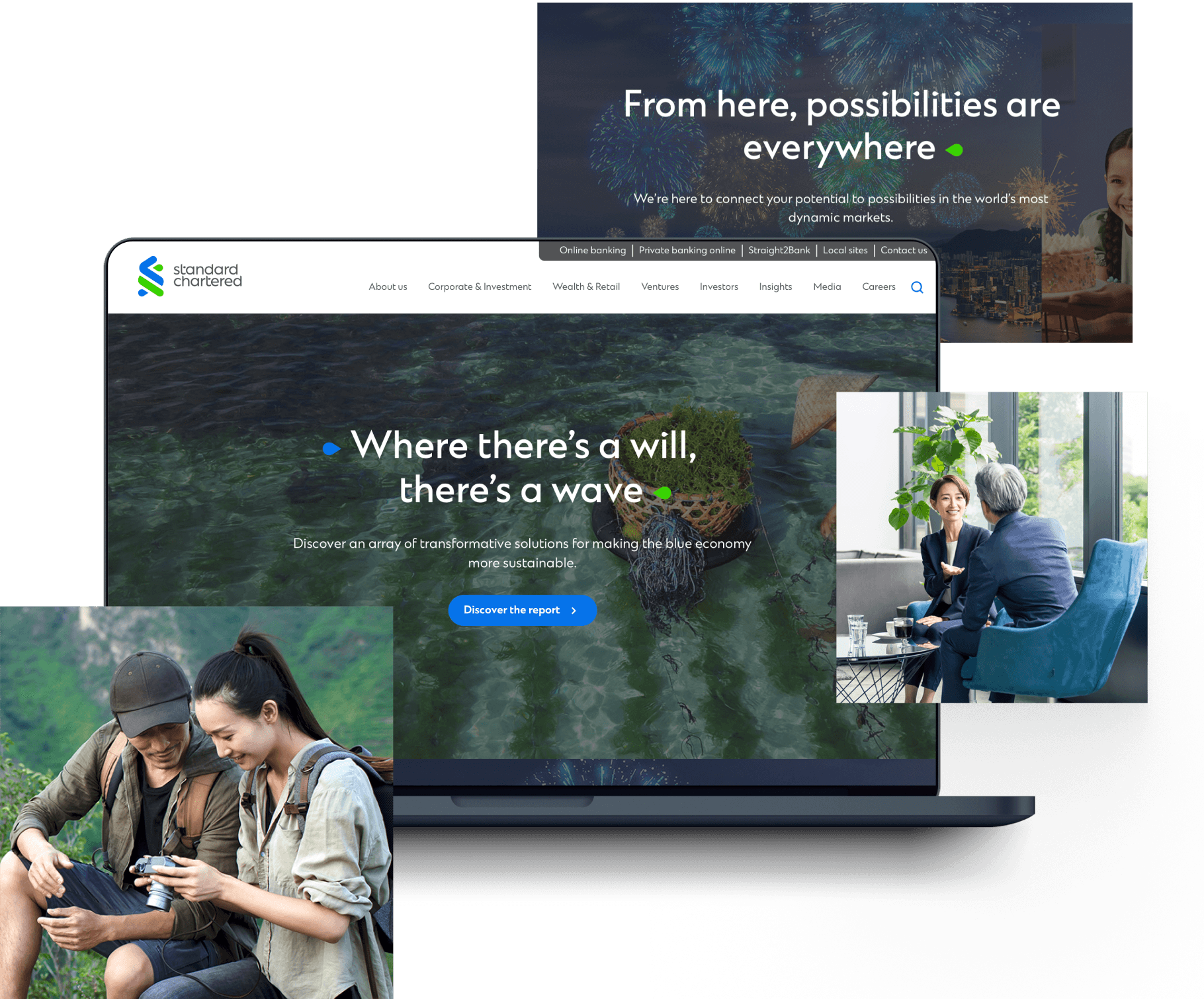
Find out how we helped global bank Standard Chartered move to a Unified Digital Platform their 1575 back-end users love
Moving toward digital cohesion
- Audit your digital ecosystem
Identify where tools and platforms overlap. Look for areas where consolidation could improve efficiency and consistency. - Define ownership and governance
Ensure that teams understand who is responsible for managing each system. Clear accountability helps maintain focus and security. - Prioritise interoperability
When full consolidation is not practical, focus on integrating systems in ways that share data and workflows effectively. - Plan for growth
Choose technologies and partners that allow your digital ecosystem to evolve without adding unnecessary complexity.
The value of connection
Digital maturity depends on connection. When platforms, data, and teams work together, organisations gain clarity and confidence. They can deliver experiences faster, manage content more intelligently, and adapt to new opportunities with less friction.
Consolidation is about creating the conditions for better decisions, stronger collaboration, and meaningful innovation. With the right foundation, one that’s open, extensible, and built for scale, a digital ecosystem becomes an enabler, not an obstacle.
And for many enterprise organisations, that foundation is WordPress.
Find out how we could help your digital estate become better connected. Get in touch.
WordPress for Enterprise#Hidden #Cost #Digital #Fragmentation1767926737
