

Subscribe to Updates

    Get the latest creative news from FooBar about art, design and business.

    What's Hot

    Feds will require data centers to show their power bills

    April 16, 2026

    LinkedIn data shows AI isn’t to blame for hiring decline… yet

    April 16, 2026

    X’s Big Bot Purge Wiped Out a Lot of People’s Secret Porn Feeds

    April 16, 2026
    Facebook Twitter Instagram
    • Tech
    • Gadgets
    • Spotlight
    • Gaming
    Facebook Twitter Instagram
    iGadgets TechiGadgets Tech
    Subscribe
    • Home
    • Gadgets
    • Insights
    • Apps

      Feds will require data centers to show their power bills

      April 16, 2026

      LinkedIn data shows AI isn’t to blame for hiring decline… yet

      April 16, 2026

      Wait, could they still actually break up Live Nation?

      April 16, 2026

      Amazon-backed X-energy files to raise up to $800M in IPO

      April 15, 2026

      Ford EV and tech chief leaving automaker

      April 15, 2026
    • Gear
    • Mobiles
      1. Tech
      2. Gadgets
      3. Insights
      4. View All

      X’s Big Bot Purge Wiped Out a Lot of People’s Secret Porn Feeds

      April 16, 2026

      AI Slop Is Making the Internet Fake-Happy

      April 16, 2026

      'The Last Airbender' Leaked Online. Some Fans Say Paramount Deserves the Fallout

      April 15, 2026

      Allbirds Is Pivoting to AI Compute. Sure, Why Not

      April 15, 2026

      March Update May Have Weakened The Haptics For Pixel 6 Users

      April 2, 2022

      Project 'Diamond' Is The Galaxy S23, Not A Rollable Smartphone

      April 2, 2022

      The At A Glance Widget Is More Useful After March Update

      April 2, 2022

      Pre-Order The OnePlus 10 Pro For Just $1 In The US

      April 2, 2022

      Motorola Edge+ Review: It Checks A Lot Of Boxes

      April 2, 2022

      This Smartphone Concept Design Is Different… In A Good Way

      April 2, 2022

      Twitter Just Made Searching Your Direct Messages Better

      April 2, 2022

      That Netflix Price Hike Is Starting To Take Place

      April 2, 2022

      Latest Huawei Mobiles P50 and P50 Pro Feature Kirin Chips

      January 15, 2021

      Samsung Galaxy M62 Benchmarked with Galaxy Note10’s Chipset

      January 15, 2021
      9.1

      Review: T-Mobile Winning 5G Race Around the World

      January 15, 2021
      8.9

      Samsung Galaxy S21 Ultra Review: the New King of Android Phones

      January 15, 2021
    • Computing
    iGadgets TechiGadgets Tech
    Home»Apps»Jeff Bezos’ Blue Origin enters the space data center game
    Apps

    Jeff Bezos’ Blue Origin enters the space data center game

    adminBy adminMarch 21, 2026No Comments3 Mins Read
    Facebook Twitter Pinterest LinkedIn Tumblr Email
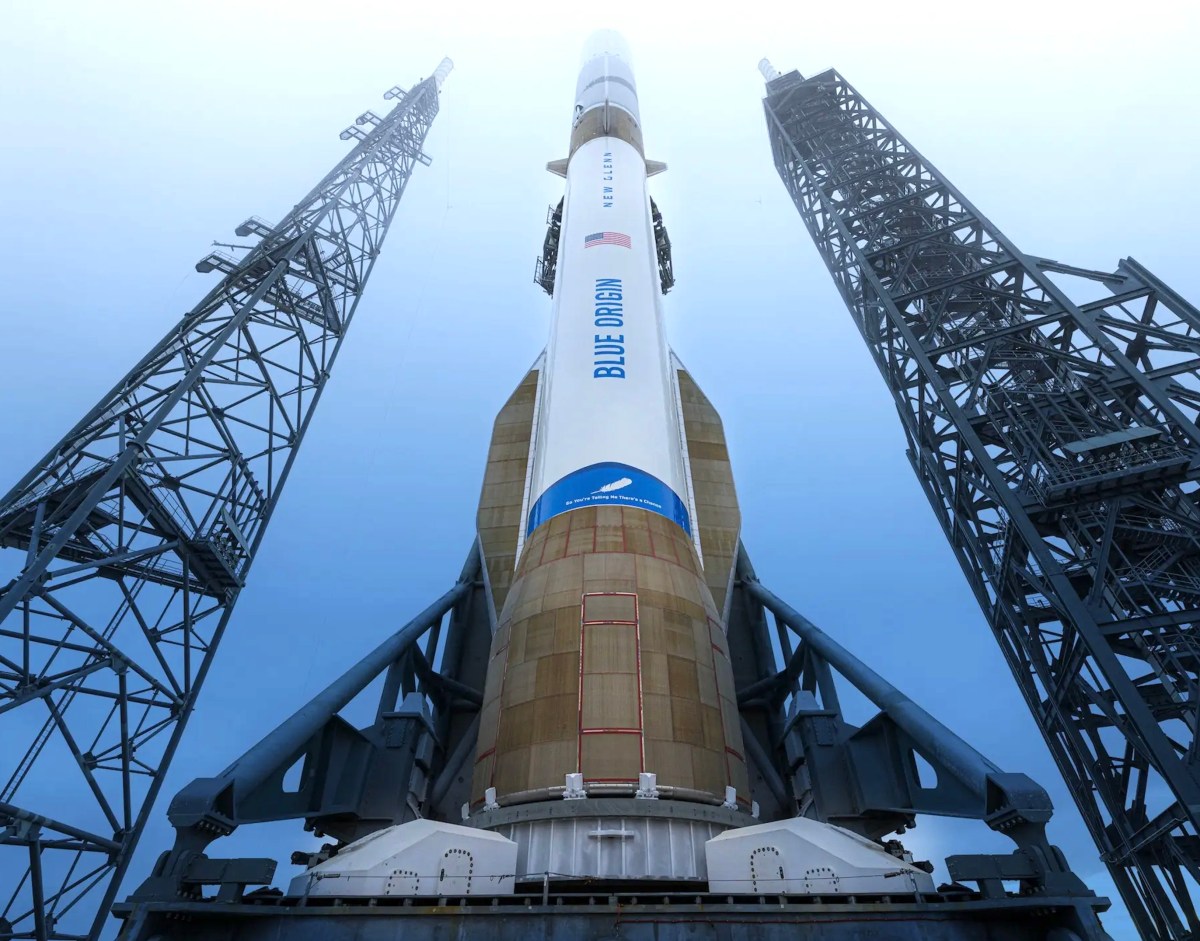
    Blue Origin's New Glenn rocket on the launchpad
    Share
    Facebook Twitter LinkedIn Pinterest Email

    Blue Origin, the space conglomerate founded by Amazon chair Jeff Bezos, has asked the U.S. government for permission to launch a network of more than 50,000 satellites that will act as a data center in orbit.

    In a March 19 document filed with the Federal Communications Commission (FCC), Blue Origin’s attorneys described “Project Sunrise” as a network of spacecraft that will perform advanced computation in orbit to “ease mounting pressure on U.S. communities and natural resources by shifting energy — and water-intensive compute away from terrestrial data centers.”

    Blue Origin’s filing did not describe its plans for the satellites in detail, so it’s hard to know how much computing power the company is aiming to generate in space. It does note that Blue Origin plans to use another satellite constellation it is seeking to build, called TeraWave, as a high-throughput communications backbone for the data satellites.

    Shifting massive compute to space is attractive because solar energy is free to harvest and, once in orbit, there are fewer regulations restricting corporate activities. Entrepreneurs behind these projects envision a future where AI tools are widespread and imagine that much of the inference work behind them will be outsourced to orbit.

    Several companies are already pursuing the idea. SpaceX has filed for permission to launch a million satellites to be used as a distributed data center, while the startup Starcloud has proposed a network of 60,000 spacecraft to the FCC. Google is also developing a concept for a space data center called Project Suncatcher, which will see its partner Planet Labs launch two demo spacecraft next year.

    While excitement about space data centers is high in the tech world, the economics of these projects remain challenging. Technology for cooling processors and communicating between spacecraft with powerful lasers will need to be developed and manufactured as cheaply as possible, while scientists are still determining how well advanced chips work on different tasks while exposed to the high radiation environment of space.

    A critical area is the cost to launch these computers into orbit, and most are betting that the price of reaching orbit will fall due to SpaceX’s Starship rocket, which is still under development and may see its first 2026 launch next month.

    Techcrunch event

    San Francisco, CA
    |
    October 13-15, 2026

    This is an area where Blue Origin, long an also-ran in the rocket business, may have an advantage. Its New Glenn rocket, which first flew last year, is one of the most powerful operational launch vehicles on Earth. If the company can start flying and reusing them at a regular pace, Blue Origin could see the same kind of benefits from vertical integration that allowed SpaceX to dominate space telecommunications with its Starlink network.

    Beyond economic and technological challenges, the space environment itself may prove an obstacle. Space in key orbits close to Earth is getting ever more congested, and adding tens or hundreds of thousands of new satellites will increase concerns about orbital collisions. Meanwhile, burning up thousands of satellites in orbit after they become obsolete, as is standard practice in the industry today, is likely to affect the chemistry of the upper atmosphere, with researchers concerned about harms to the ozone layer.

    The filing also lacked details about timing, but experts tell TechCrunch that such projects are unlikely to come to fruition until the 2030s.

    Space,TC,data centers,Blue OriginSpace,data centers,Blue Origin#Jeff #Bezos #Blue #Origin #enters #space #data #center #game1774063588

    Bezos Blue Blue Origin center Data data centers Enters Game Jeff Origin space
    Share. Facebook Twitter Pinterest LinkedIn Tumblr Email
    admin
    • Website
    • Tumblr

    Related Posts

    Feds will require data centers to show their power bills

    April 16, 2026

    LinkedIn data shows AI isn’t to blame for hiring decline… yet

    April 16, 2026

    Wait, could they still actually break up Live Nation?

    April 16, 2026
    Add A Comment

    Leave A Reply Cancel Reply

    Editors Picks
    8.5

    Apple Planning Big Mac Redesign and Half-Sized Old Mac

    January 5, 2021

    Autonomous Driving Startup Attracts Chinese Investor

    January 5, 2021

    Onboard Cameras Allow Disabled Quadcopters to Fly

    January 5, 2021
    Top Reviews
    9.1

    Review: T-Mobile Winning 5G Race Around the World

    By admin
    8.9

    Samsung Galaxy S21 Ultra Review: the New King of Android Phones

    By admin
    8.9

    Xiaomi Mi 10: New Variant with Snapdragon 870 Review

    By admin
    Advertisement
    Demo
    iGadgets Tech
    Facebook Twitter Instagram Pinterest Vimeo YouTube
    • Home
    • Tech
    • Gadgets
    • Mobiles
    • Our Authors
    © 2026 ThemeSphere. Designed by WPfastworld.

    Type above and press Enter to search. Press Esc to cancel.