

Subscribe to Updates

    Get the latest creative news from FooBar about art, design and business.

    What's Hot

    The Strait of Hormuz Has Been Closed for 100 Days. Why Aren’t Oil Prices Higher?

    June 14, 2026

    Škoda’s New EV Will Likely Be Its Most Expensive Yet

    June 14, 2026

    As Anthropic suspends access to new models, India debates its AI future

    June 14, 2026
    Facebook Twitter Instagram
    • Tech
    • Gadgets
    • Spotlight
    • Gaming
    Facebook Twitter Instagram
    iGadgets TechiGadgets Tech
    Subscribe
    • Home
    • Gadgets
    • Insights
    • Apps

      As Anthropic suspends access to new models, India debates its AI future

      June 14, 2026

      Meta reportedly moves to unwind $2B Manus deal after Beijing’s demand

      June 14, 2026

      KPMG pulls report on AI usage due to apparent hallucinations

      June 13, 2026

      Amazon CEO reportedly raised Anthropic model concerns before government crackdown

      June 13, 2026

      This thin under-pillow speaker helped me fall asleep without earbuds

      June 13, 2026
    • Gear
    • Mobiles
      1. Tech
      2. Gadgets
      3. Insights
      4. View All

      The Strait of Hormuz Has Been Closed for 100 Days. Why Aren’t Oil Prices Higher?

      June 14, 2026

      Škoda’s New EV Will Likely Be Its Most Expensive Yet

      June 14, 2026

      The FCC Wants to Kill Burner Phones

      June 13, 2026

      EcoFlow PowerOcean Battery Review: Cutting My Bill in Half

      June 13, 2026

      March Update May Have Weakened The Haptics For Pixel 6 Users

      April 2, 2022

      Project 'Diamond' Is The Galaxy S23, Not A Rollable Smartphone

      April 2, 2022

      The At A Glance Widget Is More Useful After March Update

      April 2, 2022

      Pre-Order The OnePlus 10 Pro For Just $1 In The US

      April 2, 2022

      Motorola Edge+ Review: It Checks A Lot Of Boxes

      April 2, 2022

      This Smartphone Concept Design Is Different… In A Good Way

      April 2, 2022

      Twitter Just Made Searching Your Direct Messages Better

      April 2, 2022

      That Netflix Price Hike Is Starting To Take Place

      April 2, 2022

      Latest Huawei Mobiles P50 and P50 Pro Feature Kirin Chips

      January 15, 2021

      Samsung Galaxy M62 Benchmarked with Galaxy Note10’s Chipset

      January 15, 2021
      9.1

      Review: T-Mobile Winning 5G Race Around the World

      January 15, 2021
      8.9

      Samsung Galaxy S21 Ultra Review: the New King of Android Phones

      January 15, 2021
    • Computing
    iGadgets TechiGadgets Tech
    Home»Tech»Data Center Operators Are Trying to Fix Their Water Use Problems
    Tech

    Data Center Operators Are Trying to Fix Their Water Use Problems

    adminBy adminJune 3, 2026No Comments4 Mins Read
    Facebook Twitter Pinterest LinkedIn Tumblr Email
    Data Center Operators Are Trying to Fix Their Water Use Problems
    Share
    Facebook Twitter LinkedIn Pinterest Email

    On Monday, SpaceX amended its initial public offering to state that water conditions—including water scarcity, regulations around water, and drought—could constrain data center development.

    It isn’t the only tech company trying to assess how water scarcity might impact its business. Water use is emerging as one of the most contentious data center issues. A recent Gallup poll found that seven out of 10 Americans are opposed to data center development, with water scarcity ranking as the top resource concern. Facing increasingly fierce resistance, some tech companies are scrambling to assure the public that they’re facing the issue head-on.

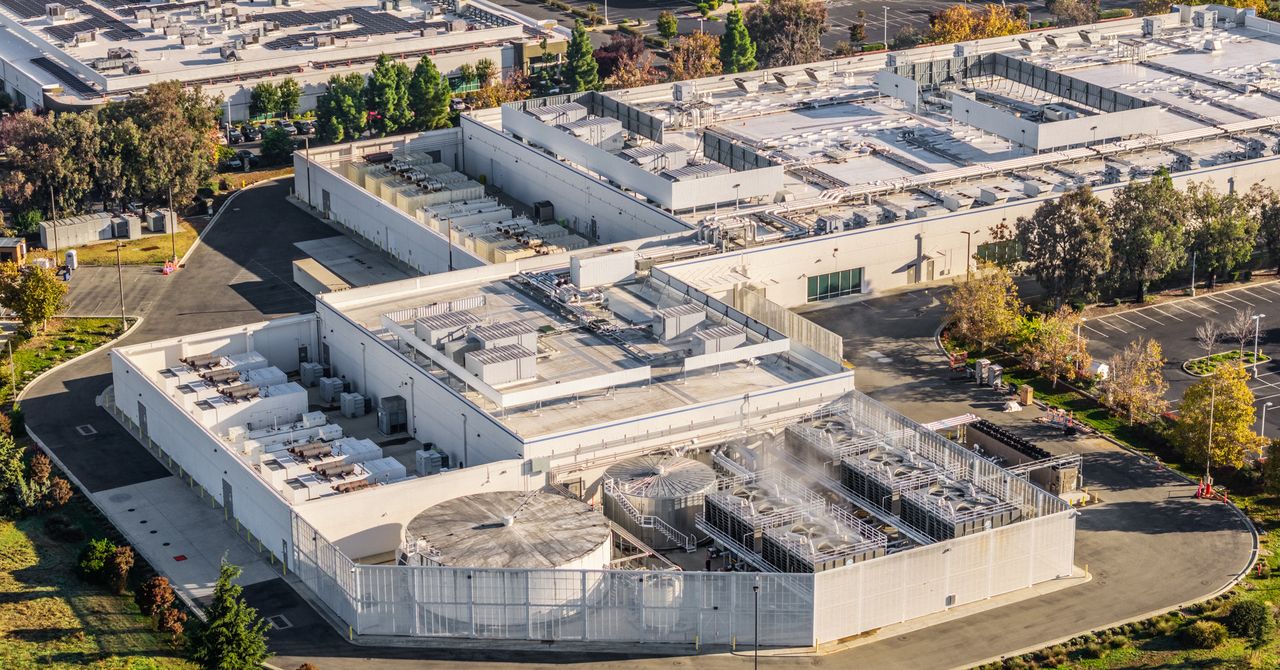
    Data centers primarily use water to cool server racks, which throw off massive amounts of heat. One popular technique, known as evaporative cooling, uses fresh water to absorb the heat, which is then pumped to cooling towers where it evaporates outside.

    Using more water can save money and reduce emissions for big tech companies by reducing the power needed for cooling that relies on energy-intensive pumps to recirculate water. But it can also come with a large water footprint: Google’s facility in Council Bluffs, Iowa, for instance, which uses evaporative cooling, consumed more than 1 billion gallons in 2024.

    Lawrence Berkeley National Laboratory predicted in a 2024 report that hyperscale data centers could consume up to 33 billion gallons of water by 2030 if they relied heavily on evaporative cooling. That’s on par or even less than other thirsty industries, like agriculture or oil and gas—a single fracked well can use 1.5 to 16 million gallons of water—but it poses a risk in regions where water is already scarce. The risk is particularly acute in summer, when data center cooling needs tend to skyrocket at the same time as municipal water use.

    “Water is a highly local, highly regional issue,” says Shaolei Ren, a professor of engineering at UC Riverside. “It’s a limited resource, and we have to manage it very carefully.”

    Some tech giants, including Microsoft, OpenAI, and Oracle, have made statements in recent months indicating that they are moving away from evaporative cooling entirely in order to save water. That includes OpenAI and Oracle’s massive Stargate expansion in a number of states, including a water-stressed region of Texas.

    Google is taking a different approach. On Wednesday, the company rolled out a series of water-related commitments to communities where it has data centers, along with funding announcements for water-related projects in the US.

    They include pledges to replenish more freshwater than the company consumes, via investments in local water projects; to scale up the use of reclaimed and recycled water; and to disclose annual water use in data centers. (Other tech companies, including Microsoft, have similar promises around water replenishment and local investment. Google has been working on most of these pledges for a few years.) There’s also a promise to use “a data-driven framework” to decide what data center designs would work best with local watersheds.

    Ben Townsend, the global head of infrastructure and sustainability at Google, says that data center design is a lot more complicated than simply swearing off one type of cooling in all cases. The company, he says, has been doing detailed hydrologic assessments of its sites for the past four years to determine what types of cooling would work best.

    “Water is scarce in some regions and plentiful in others,” he says. “A one-size-fits-all strategy just doesn’t work.”

    In April, Google defended evaporative cooling for areas with what it called “abundant” water in a filing to the European Union as necessary for developing truly sustainable data centers. Google’s arguments line up with new research from Ren and his team, who found that if all data centers in the US were to adopt some kind of evaporative cooling during peak demand, it could free up an additional 10 to 30 gigawatts of power. In areas where grids are stressed but water resources aren’t, using evaporative cooling could provide a meaningful headroom to utilities trying to balance load.

    Science,Science / Environment,Watered Downgoogle,data centers,meta,water,environment#Data #Center #Operators #Fix #Water #Problems1780493496

    center Data data centers environment Fix Google Meta Operators problems water
    Share. Facebook Twitter Pinterest LinkedIn Tumblr Email
    admin
    • Website
    • Tumblr

    Related Posts

    The Strait of Hormuz Has Been Closed for 100 Days. Why Aren’t Oil Prices Higher?

    June 14, 2026

    Škoda’s New EV Will Likely Be Its Most Expensive Yet

    June 14, 2026

    Meta reportedly moves to unwind $2B Manus deal after Beijing’s demand

    June 14, 2026
    Add A Comment

    Leave A Reply Cancel Reply

    Editors Picks
    8.5

    Apple Planning Big Mac Redesign and Half-Sized Old Mac

    January 5, 2021

    Autonomous Driving Startup Attracts Chinese Investor

    January 5, 2021

    Onboard Cameras Allow Disabled Quadcopters to Fly

    January 5, 2021
    Top Reviews
    9.1

    Review: T-Mobile Winning 5G Race Around the World

    By admin
    8.9

    Xiaomi Mi 10: New Variant with Snapdragon 870 Review

    By admin
    8.9

    Samsung Galaxy S21 Ultra Review: the New King of Android Phones

    By admin
    Advertisement
    Demo
    iGadgets Tech
    Facebook Twitter Instagram Pinterest Vimeo YouTube
    • Home
    • Tech
    • Gadgets
    • Mobiles
    • Our Authors
    © 2026 ThemeSphere. Designed by WPfastworld.
    "korean kbj​ "korean bj "koreanbj​

    Type above and press Enter to search. Press Esc to cancel.