


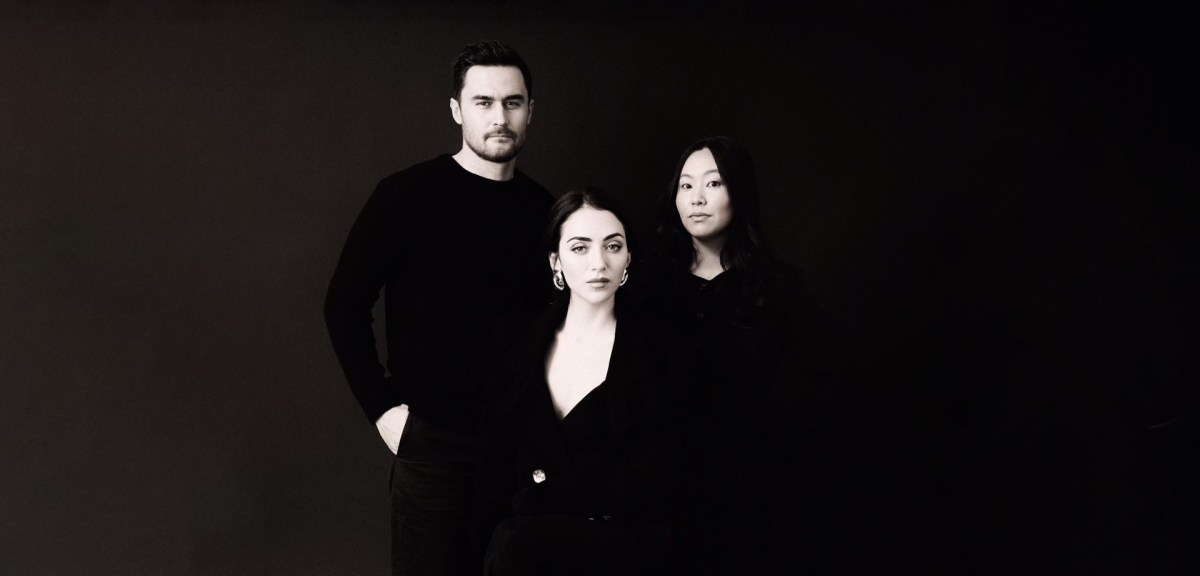
Cami Tellez is back.
Tellez is the founder of the viral undergarments brand Parade, which at one point was seen as the Gen Z rival to Victoria’s Secret. Launched in 2019, when Tellez was just 21, the company went on to raise millions in funding and attract thousands of customers, but was sold in 2023 to the lingerie manufacturer Ariela & Associates. Late last year, Parade announced it was officially closing its doors.
But it turns out Parade was just the beginning of Tellez’s journey as a founder. On Monday, she and former TikTok executive Jon Kroopf announced the launch of the influencer marketing platform Devotion, which they said will help large brands to run and manage their influencer programs.
Right now, many of these brands have human teams juggling existing influencers and discovering new ones. It’s a tedious task, often bogged down by how fast this space moves.
“The first version of the creator economy was built around macro creators, brands working with 15 or 20 highly visible faces each month,” Tellez said. “That model hasn’t worked.” Citing a 2025 IAB report showing that creators still account for about 2% of ad spend, she added, “The issue isn’t belief in creators, it’s unlocking the high-scale model that works in a content-based algorithm.”
Devotion automates parts of this process, using AI to help brands scale their creator discovery, management, and content workflows. They still have humans to review the AI’s decisions.
“There are no rogue-like agents that operate independently of a human review,” Kroopf told TechCrunch. “But they make everything we do much faster.”
Techcrunch event
San Francisco, CA
|
October 13-15, 2026
Devotion works with brands on tasks such as analyzing influencers’ posts and captions to ensure they are within company guidelines; it helps brands decide which posts to share and boost; and it can provide a brand fit score indicating how well a creator aligns with the brand’s ethos. It also helps brands pay creators, which would be difficult to manage if the responsibility lay solely with humans, Kroopf said.
“It’s all about high-scale creator ecosystems,” Tellez, the company’s creative director, said. “A new type of creator community that drives more scale, lower CPMs [cost per millage], [and] more algorithmic impact.”
Tellez said Devotion spent much of last year in beta mode and has already amassed more than 10 clients and reached seven figures in revenue. Aside from emerging from stealth, the company also announced it raised $4 million in a round led by Basecase and Will Ventures.
“We’re leveraging technology to open up what we think is a new opportunity, where there hasn’t been a lot of attention paid from the space thus far, because it just wasn’t feasible,” Kroopf said, adding that previously, it wasn’t cost-effective for a brand to dedicate so much money and resources to building a platform like this for themselves.
“In 2019, when I started Parade, there was no real kind of software that allowed you to really engage ambassadors [influencers] at scale,” Tellez said. Back then, she and her team built technology that helped them track and execute gifting, engagement, and payment, and build an end-to-end pipeline to manage their relationships with creators. “That was a dramatic drive of our growth,” she continued, noting that many other founders came to her during that time asking how they, too, could replicate influencer engagement.
At the same time, she said she realized that the algorithm had changed, really in an effort led by TikTok. Though Devotion was her idea, she brought on Kroopf to help her understand how to engage with this new algorithm. Five years ago, for example, she said, a creator could make a post, and it would reach about 20% of their audience; today, that number is closer to 2%.
“The feed is no longer determined based on your social graph or your follower count,” she said. “It’s much more determined on the performance of the content and the algorithm and driven by your interests and other content, similar content you have interacted with.”
The result is a brave new world: A nurse in Ohio has the same algorithmic potential as a macro-creator, Tellez said. “We’re entering into a new paradigm where influence has been democratized.”
As a result, brands need to operate like content networks and work with hundreds, no, thousands of influencers a month if they want to create content that can drive scale, Tellez said.
Devotion works on behalf of brands to build a bespoke content engagement strategy to better understand which influencers to tap and how to foster that community over time.
There are other creator economy agencies similar to this, like Pearpop. Tellez said Devotion’s fresh capital will be used to hire more engineers and brand operators to build out more of the company’s tech stack.
There are plans to build more AI agents soon, though nothing can be announced yet, they said. Overall, Tellez said she thinks brands are still looking for authentic ways to connect with real people, working with people from across the spectrum (not just the most famous) to get brand messaging across.
“We are already seeing the consensus shift towards our vision for scaled creator ecosystems for even the world’s largest and traditionally most risk-averse brands,” Tellez said. “They don’t want to get caught behind the algorithm. At the same time, we’re deepening our AI systems so we can manage thousands of creators with precision — without sacrificing taste or intimacy.”
Startups,Venture,creator economy,influencerscreator economy,influencers#Parades #Cami #Tellez #announces #creator #economy #marketing #platform #funding1772533020
