


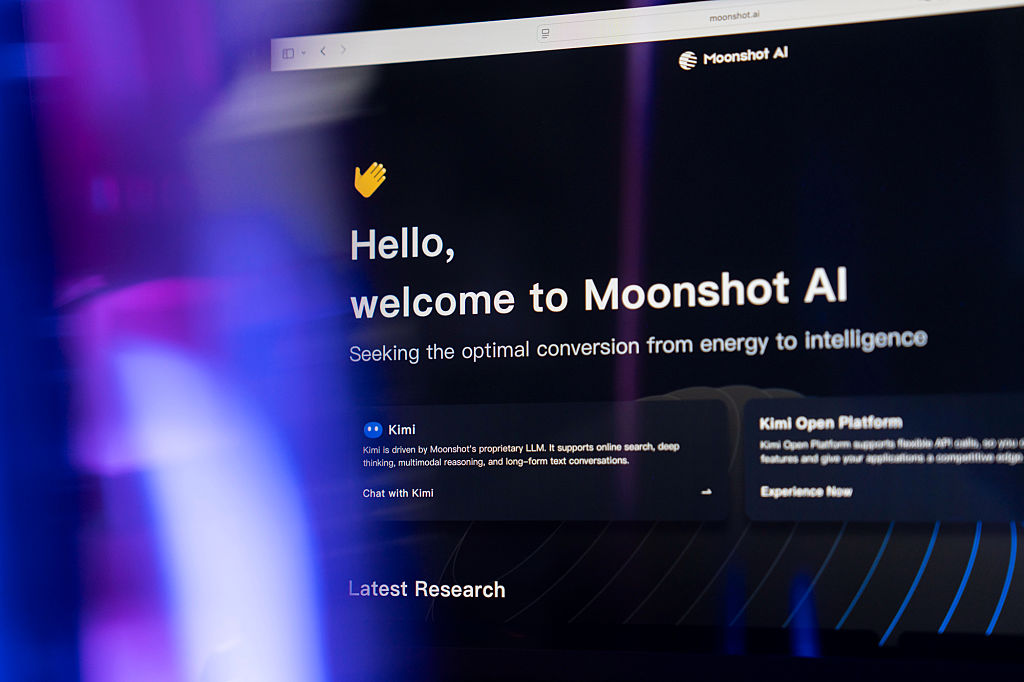
The launch of the latest AI model from a Chinese company — Moonshot AI’s Kimi — reignited debates around American competitiveness and open versus proprietary AI.
While there was plenty of conversation on social media, it seems the debate is also happening behind the scenes in Washington, D.C., where OpenAI and Anthropic have reportedly lobbied regulators with concern about open Chinese models.
On the latest episode of TechCrunch’s Equity podcast, Kirsten Korosec, Sean O’Kane, and I discussed why this seems to be such a hot button issue. Beyond suggesting that certain folks should “touch grass” rather than spending their weekends arguing on X, Sean noted that in many ways, this “feels like we’re seeing repeats of prior freakouts,” with everyone in Silicon Valley “expecting that something is going to arrive and blow everything else away.”
And Kirsten noted that putting heavy restrictions on Chinese AI models could primarily benefit a handful of companies: “Are we accelerating and ensuring that Americans win the AI race, or are we ensuring that certain frontier labs do better than others?
Keep reading for an excerpt of our conversation, edited for length and clarity.
Anthony Ha: For folks who have followed the discourse around Chinese AI, this will probably be very, very familiar from the launch of DeepSeek, where basically a Chinese model comes out; on some benchmarks, it does as well, or at least seems competitive with some of the frontier models; and a certain portion of the tech industry loses their mind.
Some of this [debate] got extra scrutiny because one of the people posting about it was [an executive] at OpenAI. But in general, there [is] this recurring question of: Can Chinese companies beat US companies, at least in some aspects, and do it much more cheaply and in a much more open way?
Sean O’Kane: Yeah, there are many elements of this that feel like we’re seeing repeats of prior freakouts. I think one of my favorites is: Everybody is so ready [for] and so expecting that something is going to arrive and blow everything else away. And I think my favorite example of that this past week was people showing off that “My gosh, Kimi made in 30 minutes an entire replication of macOS.” And yeah, it made a pretty impressive graphical reproduction of what macOS looks like, but it’s not an OS.
We keep seeing these things happen over and over again, where everybody’s so jumpy in the tech industry. And I think in particular, with some of the Chinese models that come out, there’s this expectation, and I think this gets to the core of why people reacted the way they reacted last weekend. (Also, by the way: Go outside, touch grass, it’s the weekend. Everybody in the industry was trading barbs on Twitter all weekend.) But this jumpiness is really interesting to me because we’re now a week out and I don’t think anybody’s feeling like the end is nigh like they were a week ago.
Kirsten Korosec: We have a really great story by one of our reporters, Tim Fernholz, who tries to unpack the psychosis around this here in the United States. He points to a number of reasons. And concludes — and I don’t want to conclude it for him, but I think that there’s one that rises more to the top than others.
There’s concerns that these Chinese open weight models might have an implicit bias towards China, there’s another worry about security risks and guardrails. But there’s also a pretty big idea here, which is protectionism, and who is going to quote-unquote “win the race”? Is it going to be the US or China? And that seems to be driving a lot of what the fear is.
I don’t know, Anthony, if you agree with that?
Anthony: I completely agree. I think the China aspect always adds this certain level of hysteria. And that’s not to say that people shouldn’t be concerned about how the U.S. stacks up against China across different industries. But it gets so amped up.
The other thing this reminds me of is the discussion around TikTok a few years ago. And again, it wasn’t that I thought that the concerns around TikTok were totally made up, but that the level of how panicked people got — it seems as soon as you add the word China to any discussion, things just ramp up dramatically. And then in this case, it’s linked to this discussion about open [weights] and this idea that AI is so powerful and so dangerous that the only way we can control it is with these proprietary models from these American frontier companies.
Obviously, most people saying this [have] reasons why they want to say that. David Sacks, who was the AI czar for the Trump administration [and] now has a different role in the Trump administration, was shouting on X about how, “I can’t believe people are opposing data centers, we’re tying ourselves in knots, there’s too much regulation.” And so it’s a way to argue for the positions that they already had around AI. “My gosh, if China beats us, that’s unthinkable, so you have to do what I want to do anyway.”
Kirsten: Right, and if you were to put across-the-board bans on Chinese open weight models — I’m not saying that there aren’t real concerns here, but let’s just play that out. If we were to do that, it would benefit models created by OpenAI, for instance, and it would force enterprises to use those as opposed to using models like Kimi.
So you really have to ask the question: Are we accelerating and ensuring that Americans win the AI race, or are we ensuring that certain frontier labs do better than others?
Sean: At this point, we should say a lot of this discussion really got kicked off by the head of strategic futures at OpenAI, Dean Ball, who was the first one to come out with this really long post mentioning some of these concerns.
Part of me thinks the reaction to this was because people disagreed with what Dean wrote. Part of me also thinks the reaction was driven by the fact that he kind of just said the thing out loud. He basically said the US should create regulatory FUD — fear, uncertainty, and doubt — and muck up the ability for these open weight models to compete with the US. [Ball later backed away from this argument.]
And to me, I think you can read in some of the responses from folks, like, “You’re not supposed to say that out loud, Dean.”
When you purchase through links in our articles, we may earn a small commission. This doesn’t affect our editorial independence.
AI,Government & Policy,kimi,moonshot ai,OpenAIkimi,moonshot ai,OpenAI#Making #sense #panic #Chinese1785095995
