


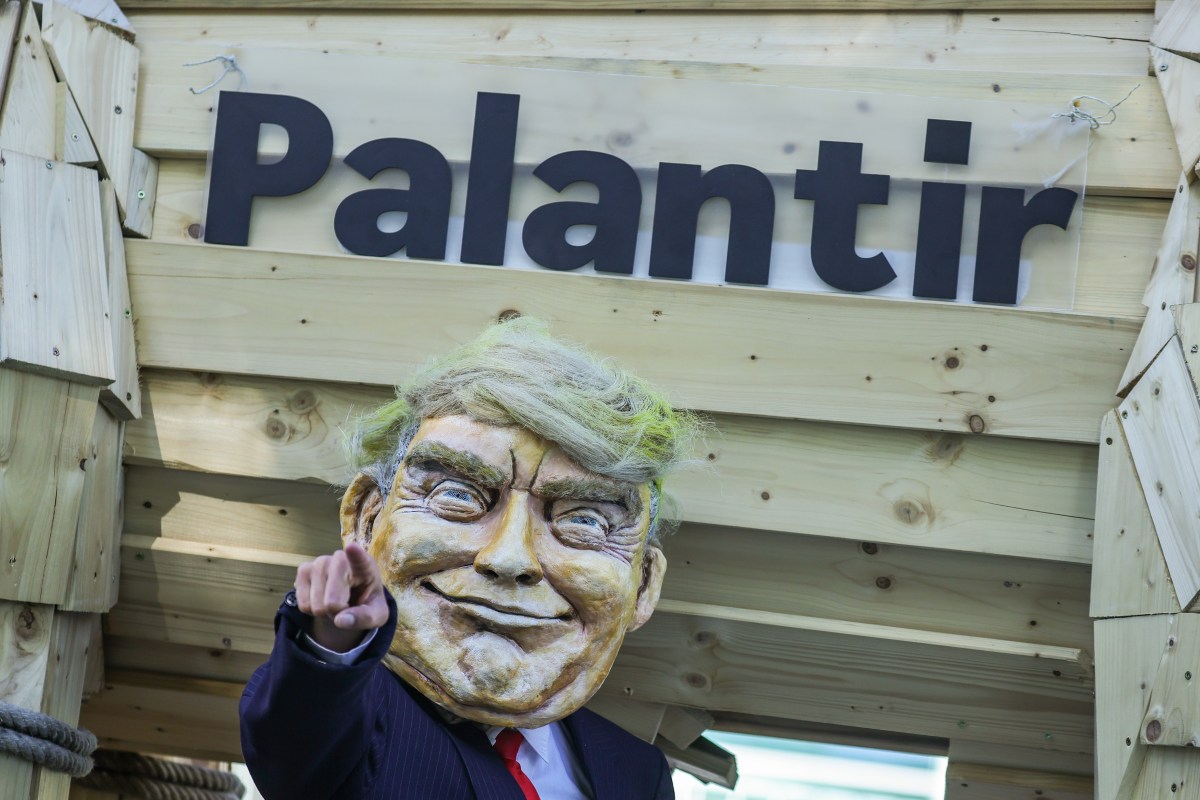
Microsoft CEO Satya Nadella is far less vocal about his worldviews than Palantir’s Alex Karp. And yet, France is taking steps to reduce its reliance on Windows, while its domestic intelligence agency recently renewed its contract with the increasingly controversial data analytics company.
This paradox is representative of Europe’s messy breakup with U.S. tech. After painful realizations that it comes with strings attached, governments across the region are looking to rely less on American providers. But the steps taken so far have been uneven and often reactive.
The CLOUD Act changed the equation
One change Europe is reacting to dates back to the first Trump presidency. Enacted in 2018, the CLOUD Act forces U.S.-based tech companies to comply with law enforcement requests for data even if the information is stored abroad. This means that even servers located on European soil are no longer enough reassurance when critical data is concerned.
Of all the information that governments sit on, health data is arguably among the most sensitive. Still, the CLOUD Act’s extraterritorial reach didn’t stop the U.K. from striking deals with the likes of Google, Microsoft, and Palantir around data from its National Health Service (NHS) during the pandemic. But if critics have their way, it may end up following France’s lead.
One year ago, the French government announced that its Health Data Hub would be leaving Microsoft Azure in favor of a “sovereign cloud.” This contract has now been awarded to Scaleway, a French cloud provider with a rapidly expanding network of data centers across Europe.
A subsidiary of French group iliad, Scaleway was also one of four providers that won a €180 million sovereign cloud tender from the European Commission (approximately $211 million). AWS European Sovereign Cloud, which Amazon launched to address Europe’s concerns, is not on the list. However, some worry that the U.S. may still have a backdoor due to one winner using S3NS, a “trusted cloud” joint venture between Thales and Google Cloud.
Europe’s alternatives still face steep odds
It wouldn’t be the first time that solutions championed as alternatives to Big Tech face issues caused by their underlying dependencies. Qwant, for instance, was once recommended as the default search engine for public servants in France while relying on Microsoft’s Bing — a partnership that went sour when the French company accused the U.S. giant of abusing its position. The relevant watchdog declined to take action, but Qwant had already made its own move.
Techcrunch event
San Francisco, CA
|
October 13-15, 2026
Joining forces with German non-profit Ecosia, Qwant launched Staan, a Europe-based and privacy-focused search index that could help search engines like theirs reduce their dependency on Google and Bing. But both partners still lag far behind their U.S. rivals in notoriety and reach — even the slightly more popular Ecosia has only about 20 million users, not billions.
Capturing market share is arguably the main issue facing companies challenging U.S. giants — but public contracts could give them a leg up. For instance, the European Commission’s tender will also benefit French cloud providers CleverCloud and OVHCloud, as well as STACKIT, which Lidl’s parent company Schwarz Group created for its own needs but now commercializes.
The perspective of winning large contracts with European institutions could encourage other players to follow the footsteps of Germany’s retail heavyweight, or at least, that’s the hope. According to its promoters, “an additional goal of the tender was to encourage the market to offer sovereign digital solutions that comply with EU laws and values.”
However, the Commission’s choice to avoid overreliance on a single provider could be a double-edged sword. On one end, diversification could provide more resilience and soothe dependence concerns. On the other hand, it won’t be the best shortcut to fostering Europe’s next trillion-dollar company.
To cynics and pragmatists, sovereign tech may look business-motivated — a way to ensure that euros stay home. But Europe’s conscious uncoupling from U.S. tech hasn’t always translated into contracts for its startups. For instance, France is ditching Windows for the open source operating system Linux. Institutions in Austria, Denmark, Italy, and Germany are similarly looking to replace Microsoft’s suite of products with open source alternatives, such as LibreOffice.
This switch sometimes goes alongside a “build, don’t buy” philosophy that has raised criticism. France’s Court of Auditors has questioned spending on in-house tools such as Visio, a purported replacement for Zoom and Microsoft Teams. Financial newspaper Les Échos also reported on backlash voiced across the tech ecosystem, including this rhetorical question: “If the government doesn’t lead by example, how can you expect large private companies to follow?”
Private buyers may decide the outcome
As a matter of fact, large private companies haven’t followed much. German airline Lufthansa chose Elon Musk-backed Starlink for its wifi service. So did Air France, now also a private airline but still partly controlled by the French and Dutch states — and there’s a chance that France’s state-owned railway operator SNCF may do the same.
Whether large companies choose alternatives over U.S. providers depends in large part on having technologically compelling European options. In a spat with Poland, Musk stated that “there is no substitute for Starlink” — but European governments intend to prove him wrong. Public sentiment could also play a role, and might not stop at many European individuals and officials leaving X.
Not being American is becoming an advantage
After President Trump threatened to take control of Greenland, apps for boycotting American products surged to the top of the Danish App Store — a sign that demand to cut back on U.S. tech is getting broader. Pressure on European governments to reconsider their contracts is also mounting, and Palantir’s latest mini-manifesto is unlikely to help its cause in the EU and the U.K.
Tech billionaires publicly defending views that many Europeans don’t share is also a sign that the divorce is two-sided. When Meta chose to delay the EU launch of Threads over concerns with European law, it was also a reminder that the region is only a secondary market for tech giants, and that they can afford to ignore it.
Conversely, this creates a market opportunity for solutions built for Europe, its many languages, and cultural nuances. This alone should naturally foster demand in their home markets, with an extra boost if supporters of the EuroStack initiative manage to make it mandatory for Europe’s public sector to buy local.
Europe may want to buy European, but there’s also hope that “sovereign tech” will sell abroad. Mistral AI reportedly saw its revenues surge for being an alternative to OpenAI. Meanwhile, the Canadian and German governments are supporting Cohere’s merger with Aleph Alpha to create a “transatlantic AI powerhouse” serving businesses and governments around the world. In 2026, not being American — nor Chinese or Russian — is increasingly a selling point.
When you purchase through links in our articles, we may earn a small commission. This doesn’t affect our editorial independence.
Government & Policy,cloud act,digital sovereignty,eurostackcloud act,digital sovereignty,eurostack#Whats #Europes #efforts #ditch #U.S #software #favor #sovereign #tech1777300426
