


Artificial intelligence is rapidly becoming part of enterprise operations, and enterprise WordPress is no exception.
Marketing teams are using AI to accelerate content production. Editorial teams are experimenting with summarisation, tagging, and content enrichment. Customer experience teams are exploring personalisation and recommendation engines. Internal teams are using AI to improve search, knowledge management, and workflow automation.
As organisations adopt these technologies, a new question is emerging: does the underlying digital platform support this evolution, or create friction around it?
For enterprise organisations, AI is not simply another technology trend to accommodate. It represents a new layer across the digital estate, touching content, data, workflows, governance, and customer experiences. Platforms that were selected primarily for publishing content are now being asked to support entirely new ways of working.
This shift is bringing renewed attention to the characteristics that make a platform adaptable at enterprise scale.
AI is increasing the value of open architecture
One of the defining characteristics of the current AI landscape is how quickly it changes.
New models emerge regularly. Existing providers introduce new capabilities at a rapid pace. Organisations are experimenting with multiple services simultaneously, often combining proprietary data with different AI platforms depending on the use case.
Few enterprises want to commit their long-term AI strategy to a single vendor.
This is where WordPress’ open architecture becomes particularly valuable.
WordPress was built around extensibility. APIs, plugins, custom development, and integration frameworks allow organisations to connect new services without fundamentally changing the platform itself. AI providers can be introduced, replaced, or expanded as requirements evolve.
This flexibility matters because enterprise AI strategies are still taking shape. The organisations creating the most value from AI are often those that retain the freedom to experiment and adapt as technologies mature.
Enterprise AI depends on integration
The most impactful AI use cases rarely exist in isolation.
A content generation tool is only useful if it fits within editorial workflows. Personalisation systems depend on audience data. AI-powered search relies on access to structured content. Workflow automation requires connections between multiple business systems.
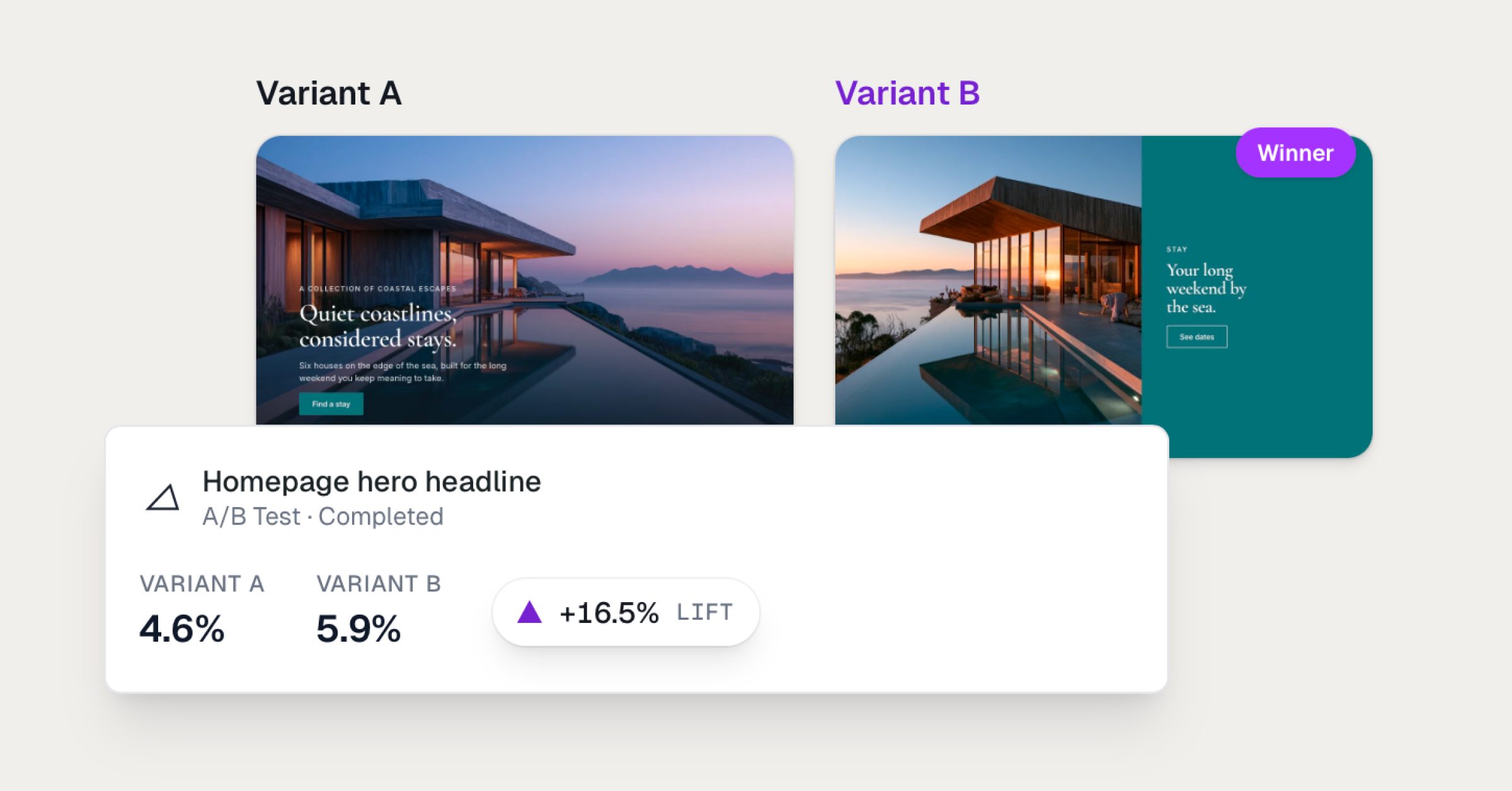
Success depends on integration.
Enterprise WordPress has long operated as part of larger digital ecosystems. It commonly integrates with customer data platforms, analytics services, DAM systems, ecommerce platforms, CRM tools, identity providers, and marketing technology stacks.
That interoperability becomes increasingly important as AI capabilities are introduced across the organisation. Rather than requiring teams to centralise everything within a single vendor ecosystem, WordPress allows AI services to become part of an existing technology landscape.
This supports a more pragmatic approach to adoption, where organisations can introduce AI where it delivers value while maintaining established workflows and governance models.
Content becomes more valuable when it is structured
AI systems depend on content.
They generate it, analyse it, categorise it, enrich it, and use it to power search, recommendations, and automation. The quality of those outputs is heavily influenced by the quality and structure of the underlying content.
This is an area where mature enterprise WordPress implementations have a significant advantage.
Organisations that invest in structured content models, consistent taxonomies, reusable content components, and robust governance frameworks create content assets that are easier for both humans and machines to work with.
As AI adoption grows, content is increasingly becoming an organisational asset rather than simply a publishing output. Structured content can be reused across channels, surfaced through AI-powered experiences, and enriched through automation in ways that are difficult to achieve when content exists in disconnected or poorly governed systems.
For enterprises managing large volumes of content across brands, regions, and channels, these foundations become increasingly important.
Governance becomes more important, not less
The excitement surrounding AI often focuses on speed and automation.
Enterprise adoption introduces a different set of concerns.
Teams need confidence in how AI is being used. They need oversight of content workflows. They need auditability, permissions, approval processes, and clear governance frameworks. Legal, compliance, security, and brand considerations all remain important regardless of how sophisticated AI becomes.
WordPress is already designed around governance at scale.
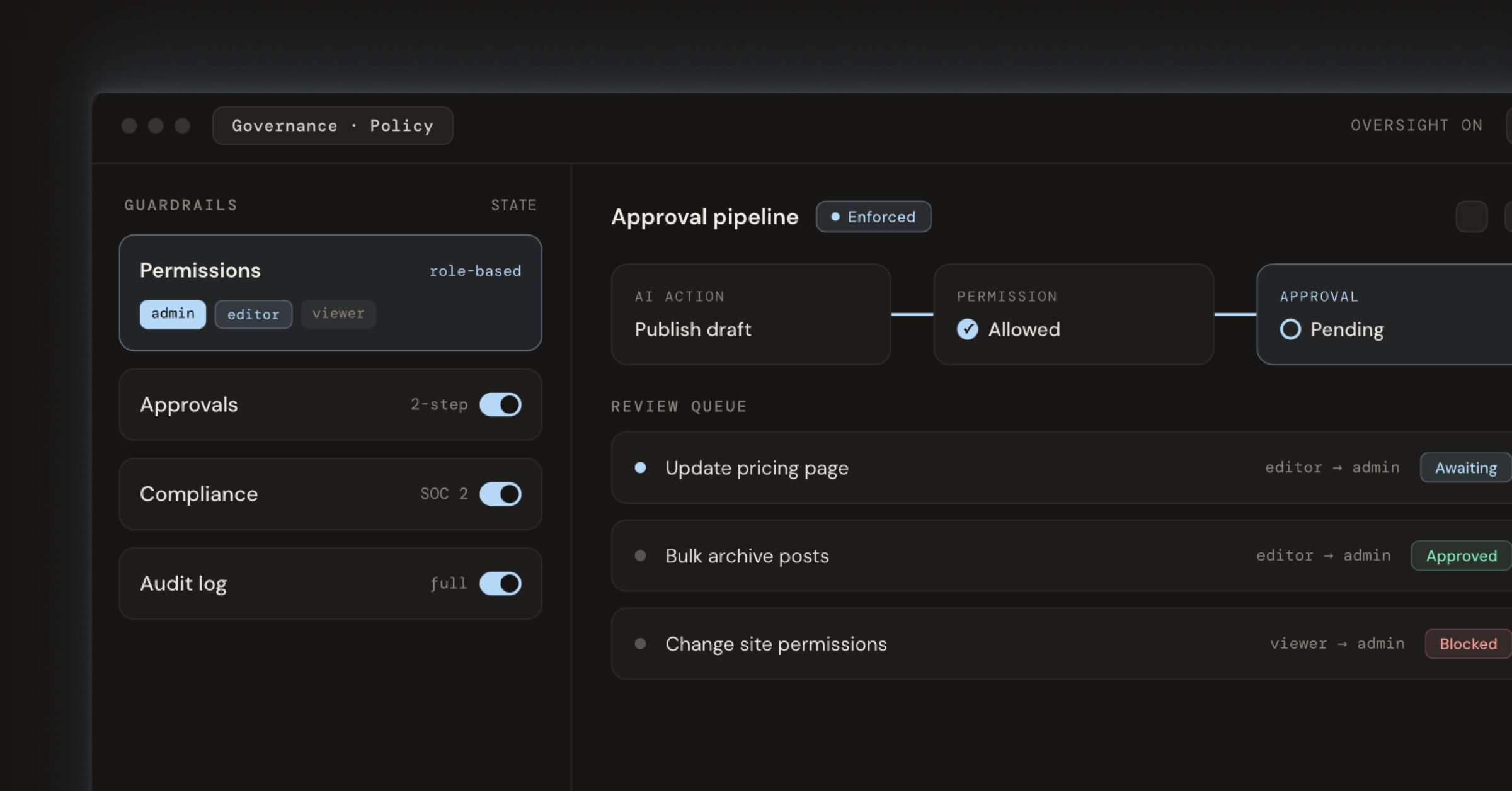
Role-based permissions, editorial workflows, approval processes, and extensible governance models allow organisations to introduce AI capabilities while maintaining appropriate oversight. AI can become part of existing workflows rather than operating outside them.
This distinction is important because enterprise AI adoption is rarely a technology challenge alone. It is often an organisational challenge that requires balancing innovation with accountability.
A global ecosystem creates resilience
The pace of AI innovation makes ecosystem strength increasingly valuable.
Organisations benefit from access to implementation expertise, proven patterns, emerging integrations, and a community that is actively exploring new possibilities.
WordPress benefits from one of the largest ecosystems in the digital industry. Thousands of organisations, developers, agencies, and technology providers contribute to its evolution. As AI capabilities become more deeply integrated into digital platforms, this ecosystem helps accelerate adoption and reduce risk.
Enterprises are not solving problems in isolation. They are drawing on a large body of shared knowledge and practical experience.
This becomes particularly important when technologies are evolving as quickly as AI.
Why WordPress continues to scale with enterprise ambition
The enterprise conversation around AI often focuses on tools.
The more significant question concerns the foundations those tools depend on.
Organisations need platforms that can integrate new technologies, support evolving workflows, govern increasingly complex operations, and accommodate future requirements that may not yet be fully understood. They need flexibility without sacrificing control, and innovation without creating fragmentation.
These are challenges that enterprise organisations have been addressing for years. AI changes the context, but many of the underlying requirements remain the same.
WordPress continues to scale because its core strengths align closely with those needs. Open architecture, interoperability, extensibility, governance, and ecosystem depth provide enterprises with a platform that can evolve alongside changing technologies rather than being constrained by them.
As AI becomes embedded across the enterprise, those characteristics are becoming increasingly valuable.

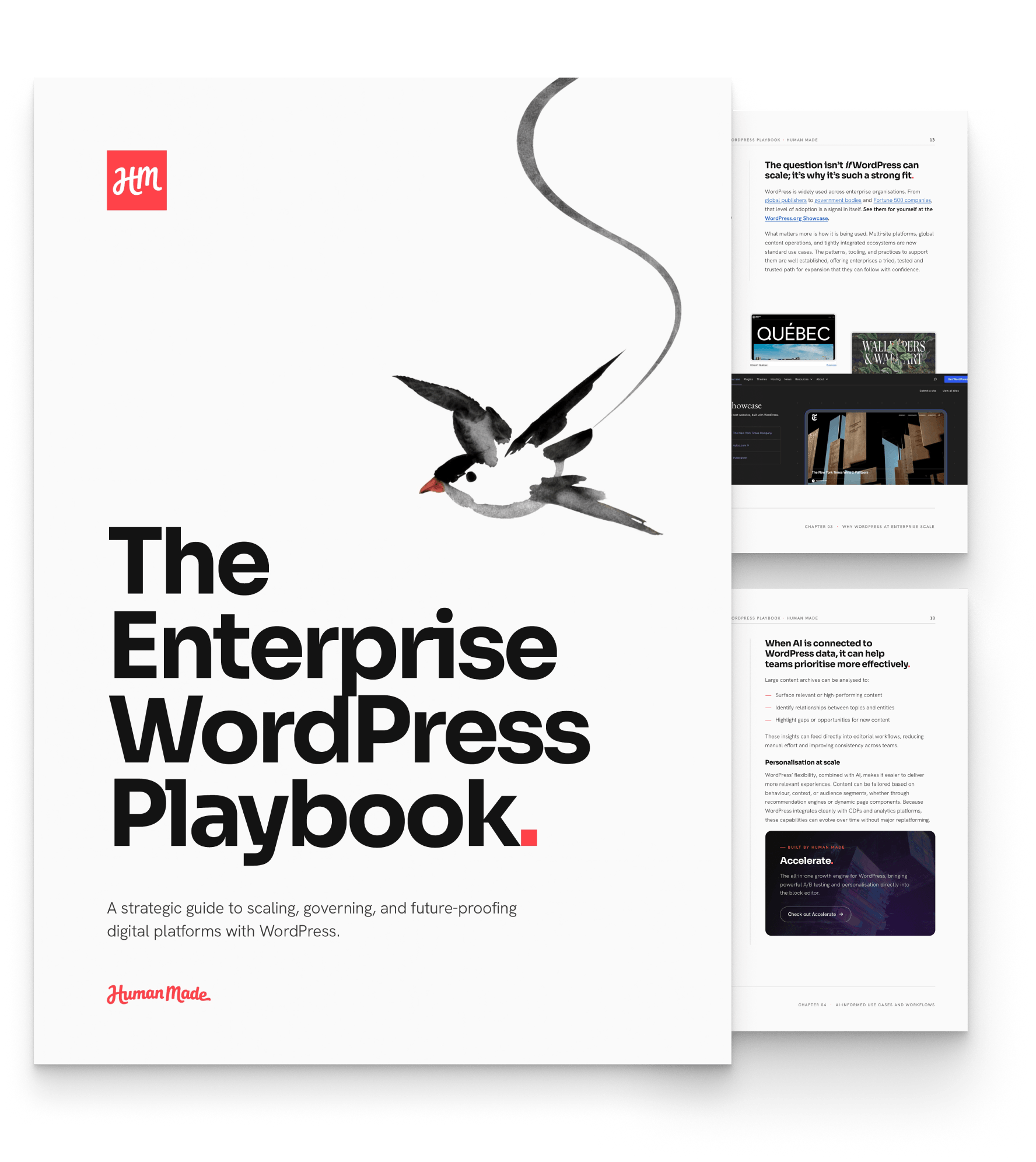
Download The Enterprise WordPress Playbook to explore how leading organisations are using WordPress to build scalable, adaptable, and future-ready digital platforms.
AI#Enterprise #WordPress #Built #Era1783598161
